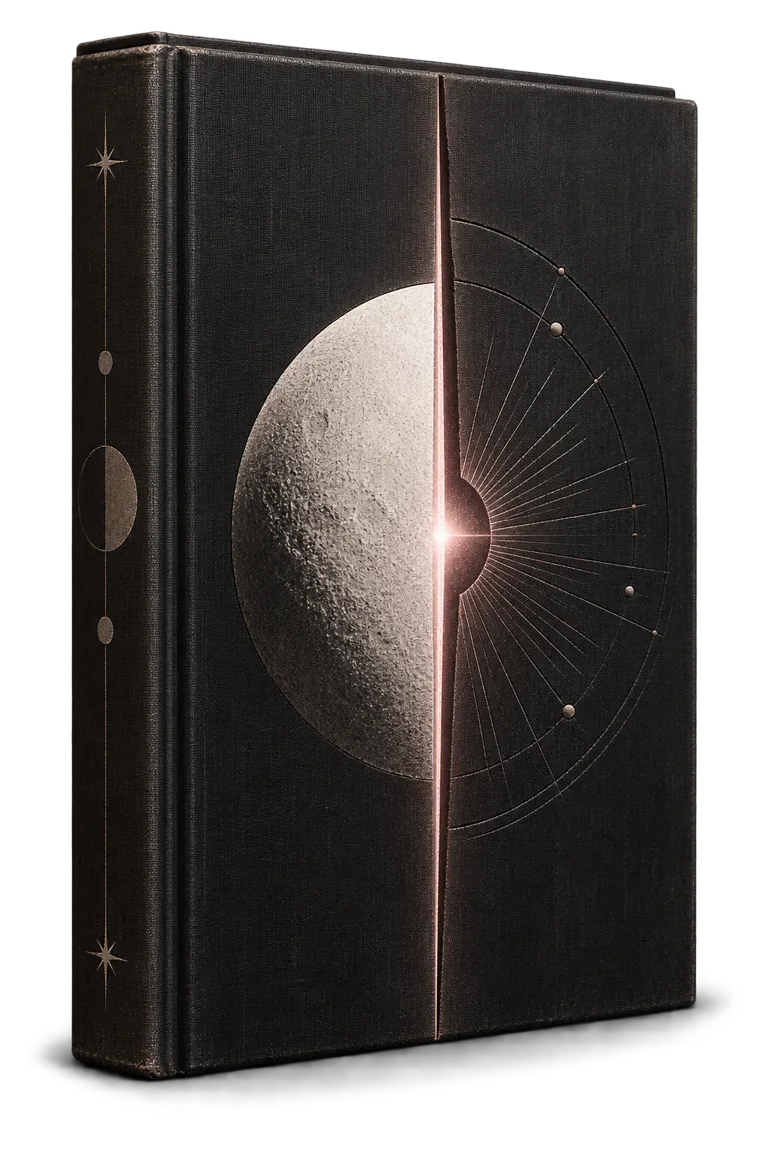
The VALIS Philip K. Dick published in 1981 turns a crisis of interpretation into its structure. A narrator named Phil discusses the visions and theories of Horselover Fat, who is gradually understood as another version of himself. This VALIS review approaches the book as science fiction, theological speculation, self-critique, and an argument about forcing experience into one explanatory system.
01
VALIS and the problem of revelation
The experience at the centre of the novel arrives as information and illumination. Fat believes an intelligence has contacted him through a beam of pink light, revealing knowledge that appears impossible for him to possess. The event might be divine, technological, psychological, extraterrestrial, or some unstable combination of those categories. The narrative refuses to settle the source before exploring what belief in the source does to the believer.
That refusal distinguishes VALIS from a puzzle designed around a concealed answer. Each explanation produces another network of correspondences. Ancient religion, modern politics, personal grief, philosophy, and speculative cosmology become possible evidence. The abundance feels exhilarating and dangerous because the same mind is generating both the theory and the tests that appear to confirm it.
02
Philip K. Dick divides the narrator
The split between Phil and Horselover Fat gives Philip K. Dick a way to dramatise self-observation. Phil can describe Fat’s convictions with sympathy and scepticism, yet the distance is never secure. The name itself signals a translation of the author’s own name, making the double less like a separate character than a method for placing one consciousness on both sides of an argument.
This division creates unusual tonal freedom. The review can call the book funny without denying its pain. Friends challenge Fat, interpretations become absurd, and moments of intellectual comedy interrupt despair. Humour is not a dismissal of the search for meaning. It prevents the search from acquiring unquestioned authority over every event.
03
A science fiction system made from theology
VALIS expands its title into a Vast Active Living Intelligence System. The phrase sounds technical, biological, and sacred at the same time. That fusion is central to the book’s science fiction. Instead of sending characters to a distant planet, the novel makes competing cosmologies occupy the same room and asks how a person could distinguish revelation from an ingenious model of revelation.
The theological references therefore do real work in the novel. Gnostic ideas, layered worlds, hidden rulers, and imprisoned light offer structures through which Fat reads suffering. Yet every structure can become another enclosure. A theory that explains everything may protect a wounded mind while also making correction impossible.
04
The film, the child, and the search for confirmation
A fictional film provides the characters with images that seem to echo Fat’s private system. Later encounters appear to draw the theory into shared reality. These developments move the novel outward without converting it into objective proof. The question becomes more difficult: if several people can recognise the pattern, does that validate it, or show how patterns travel between minds?
The search eventually concentrates hope in a child understood as a possible embodiment of salvific intelligence. The emotional need behind the theory becomes especially visible here. VALIS asks readers to hold compassion and doubt together. Fat’s desire for a world in which suffering has a legible cause is deeply human, but the desire cannot guarantee the explanation.
05
Review: reading VALIS without solving it
A useful VALIS review should resist reducing the novel to autobiography, diagnosis, or coded doctrine. Each lens catches something real and leaves something out. The book’s form is the evidence: confession becomes dialogue, philosophy becomes plot, science-fiction vocabulary becomes theology, and an invented double becomes the person conducting the inquiry.
Read this way, the VALIS Philip K. Dick left behind is a book that makes uncertainty productive. The reader watches interpretations being built, defended, revised and lived in, and a VALIS review has to report that the ideas stay tied to friendship, grief, vulnerability and the desperate wish that reality might answer back.
Questions about VALIS
What does VALIS mean in the novel?
The letters stand for Vast Active Living Intelligence System, a name that combines technological, living, and divine possibilities without resolving which description is final.
Who is Horselover Fat?
Horselover Fat is presented as a friend of the narrator before the novel makes clear that he is also a divided or translated version of Phil and, by extension, Philip K. Dick.
Is VALIS a science fiction novel?
Yes, although its speculation works through consciousness, information, theology, and interpretation more than conventional futuristic hardware or space travel.
Does this VALIS review explain whether the vision is real?
No single answer is imposed because the unresolved status of the vision is the novel’s organising problem. The review instead examines how each explanation changes the characters.